Chicken Road vs Aviator, Chicken Road Game
Chicken road vs aviator for chicken road game: requirements, timings, costs and what to do when something goes wrong.
What is Chicken Road vs Aviator?
Chicken Road vs Aviator is a direct comparison of two crash-style games that dominate the Indian online gaming market. Both titles ask players to make a single, high-stakes timing decision before a multiplier resets, but they do it through completely different mechanics, risk profiles, and payout structures. Understanding the difference helps you choose the game that matches your playing style and bankroll on platforms accepting PhonePe, GPay, and BHIM deposits.
In Aviator, a plane climbs across the screen and a multiplier rises from 1.00×. You must cash out before the plane flies off, if it crashes first, you lose your entire stake. The multiplier is provably random and can crash at any point, including 1.00×, wiping a full round with no partial recovery.

In Chicken Road Game, a chicken runs across a road lined with sequential cooking pots. Each pot your chicken clears multiplies your stake further, and you choose exactly when to collect. The critical difference is the discrete step model: Chicken Road uses a lane-by-lane decision gate rather than one continuous curve, giving players a structured pause between each risk increment. This is why many Indian players find Chicken Road easier to time than Aviator's unbroken, real-time climb.
Chicken Road vs Aviator Safety and Timing
Aviator gives you a single, continuous exit window from the moment the plane lifts to when it crashes. Historical crash data shows roughly 40 to 45% of Aviator rounds end below 2.00×, meaning nearly half of all rounds punish players who chase higher multipliers. Low-risk Aviator strategy means pre-setting an auto-cashout at 1.50× or 1.80× before the round begins, discipline must be committed in advance, not applied reactively mid-flight.
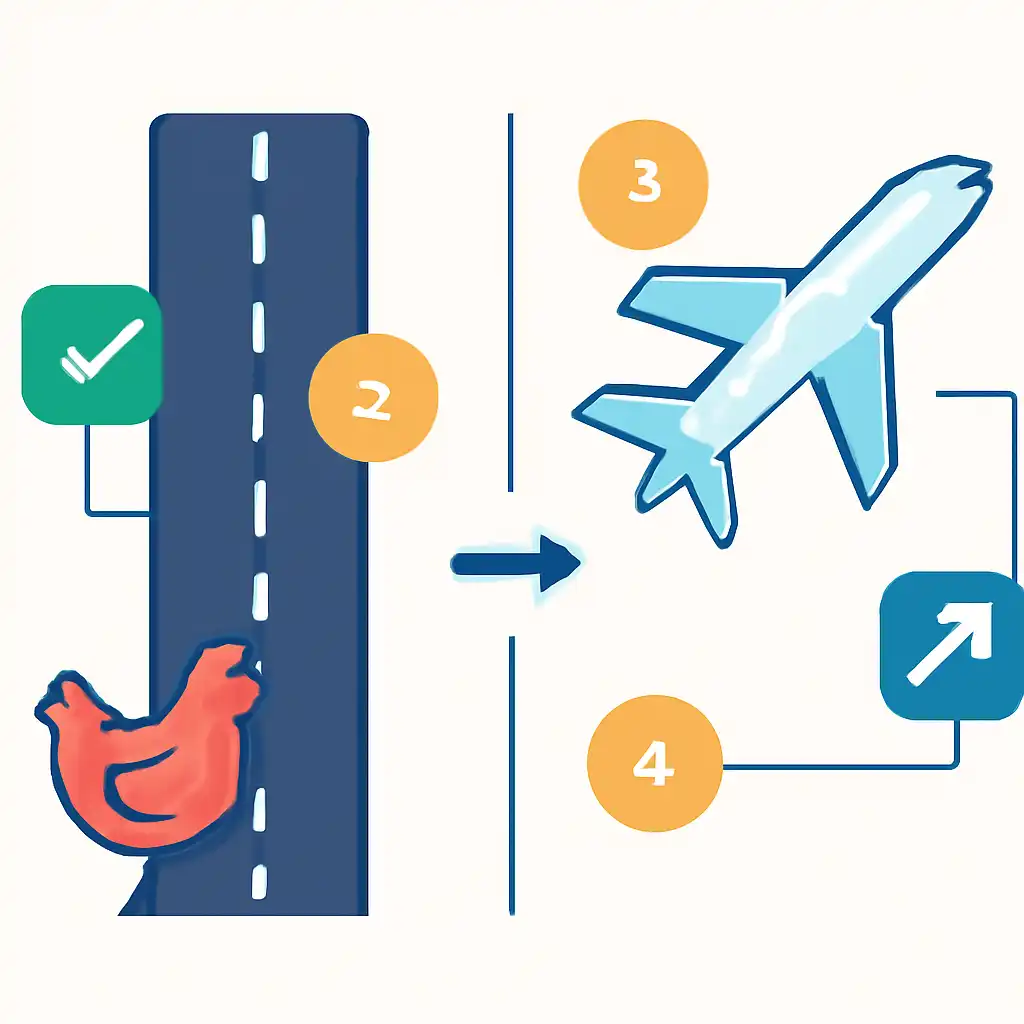
Chicken Road introduces a natural pause between each pot. After your chicken lands safely, the game prompts your next decision, jump again or collect. Pots 1 through 3 carry multipliers of roughly 1.2× to 2.5× and represent the safest exit zone for conservative Indian players. Pots 4 through 7 produce mid-range returns between 2.5× and 8×, where the majority of experienced players collect. Beyond pot 8, failure frequency increases sharply while multipliers can exceed 25×. Because no moving line forces your hand, Chicken Road eliminates panic-driven early exits that cost Aviator players meaningful gains each session.
How Chicken Road vs Aviator Works
Both games run on provably fair RNG engines audited by independent testing labs, so neither platform can manipulate individual outcomes. In Aviator, a shared multiplier climbs simultaneously for all players in the same round, everyone watches the same plane. In Chicken Road, each player's chicken runs its own independent lane, meaning your pot sequence is unaffected by other players' outcomes or bet sizes, which removes the social-pressure dynamic present in Aviator lobbies.

Deposits on both game types are processed through the same payment rails. Sites serving Indian players accept PhonePe, GPay, and BHIM for instant INR transactions, with minimum stakes typically starting at ₹50 to ₹100 per round. Aviator rounds can complete in under eight seconds, which increases session velocity and spend rate. Chicken Road rounds scale in duration based on how far each player advances, making per-session bankroll burn slower and more predictable, an important advantage for players who set strict daily loss limits.